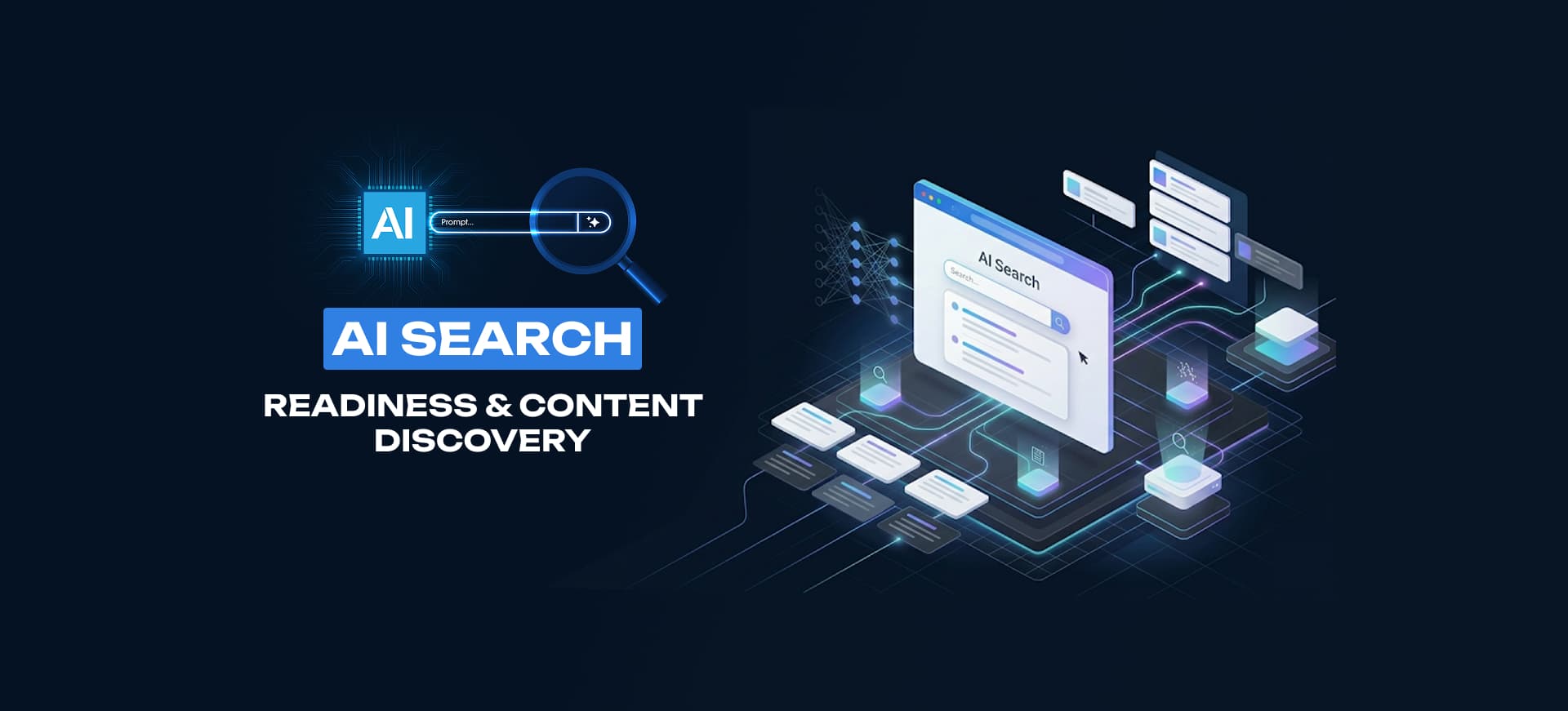

AI Search Readiness: How to Make Your Content Easier to Discover

AI Search Readiness: How to Make Your Content Easier to Discover

As search changes, brands need content that is clear, useful, and easy for both people and AI tools to understand. Here is how to prepare your content for better visibility.

HTSOL Inc

HTSOL Inc

published date

30, Apr 2026

#AI Search Readiness

#AI SEO

#SEO Content Writing

Search is changing fast. People still use search engines, but many now also use AI tools to ask questions, compare options, and find quick answers. Instead of typing a few keywords, they ask full questions and expect direct, useful responses.

This shift matters for every business that publishes content online.

If your website content is hard to read, poorly structured, or too vague, it becomes harder for AI tools to understand and surface. On the other hand, if your content is clear, well-organized, and written to answer real questions, it has a better chance of being discovered.

That is where AI search readiness comes in.

AI search readiness means making your content easier for AI-powered search tools to find, understand, and use. It does not mean writing for robots. It means creating content that is useful, direct, trustworthy, and easy to process.

In this guide, we will explain what AI search readiness means, why it matters, and how to make your content easier to discover without losing quality or brand value.


What Is AI Search Readiness?

AI search readiness is the practice of preparing your content so AI tools can easily:

  • Find it

  • Understand it

  • Trust it

  • Surface it in relevant answers

This includes content on your website, blogs, service pages, landing pages, FAQs, and knowledge pages.

In simple terms, AI-ready content clearly explains what it is about.

That means:

  • The topic is easy to identify

  • The page answers real questions

  • The structure is clean

  • The language is simple

  • The message is useful and specific

AI search tools do not just look for keywords. They try to understand meaning, context, and usefulness. That is why content that is overly broad, confusing, or written only to rank can struggle.

AI search readiness is not separate from SEO. It is a natural next step.

Traditional SEO helps search engines crawl and rank your content. AI search readiness helps modern search tools understand and use it more effectively.

Why AI Search Readiness Matters Now

People are changing how they search.

They are asking things like:

  • “What is the best way to improve website speed?”

  • “How do I choose the right digital marketing agency?”

  • “What should a small business include on its service page?”

These are not simple keyword searches. They are full questions with clear intent.

AI tools are designed to answer these kinds of questions by pulling from content they can understand with confidence.

If your content is not clear enough, it may be skipped.

Why this matters for businesses

AI search readiness can help your business:

  • Reach people earlier in their decision process

  • Build trust through helpful answers

  • Improve content visibility beyond standard search listings

  • Support organic traffic over time

  • Turn informative content into qualified leads

This matters even more for service-based businesses. People looking for help with website development, SEO, digital marketing, staff support, or digital transformation often compare many options before contacting anyone.

If your content helps them understand the problem and the solution, you are more likely to earn that trust.

Want your website content to be easier to find, easier to trust, and easier to turn into leads? A strong content structure can make all the difference.

How AI Search Looks at Content

To make your content easier to discover, it helps to understand what AI tools look for.

While every tool works in its own way, most of them value the same core signals.

1. Clear topic focus

A page should be about one main topic, not five different ideas mixed.

2. Strong structure

Headings, subheadings, short paragraphs, and logical flow help AI tools follow the page.

3. Useful answers

Content should solve a real question or problem.

4. Context and depth

The page should explain enough to be useful, not just stay at the surface level.

5. Trust and consistency

Pages should match your brand, your services, and the rest of your website.

In short, AI tools reward content that is written well for people.

That is good news. It means the goal is not to trick the system. The goal is to make your content better.

The Core Principles of AI-Ready Content

Before you update old pages or write new ones, keep these core principles in mind.

Write for clarity first.

If a reader cannot quickly understand your page, AI tools may struggle too.

Answer real questions

Your content should solve real problems, not just repeat broad ideas.

Stay focused

Each page should have one main purpose.

Be specific

Specific content is easier to trust and easier to surface.

Keep it easy to scan

Most people skim before they read. AI tools also benefit from a clean structure.

These principles apply to almost every page on your site.

How to Make Your Content Easier to Discover

This is where strategy turns into action.

Start with search intent

Before writing, ask:

  • What is the user trying to learn?

  • What problem are they trying to solve?

  • What would a useful answer look like?

A page that matches user intent is more likely to perform well.

For example, someone searching “AI search readiness” probably wants:

  • A clear definition

  • Why it matters

  • How to improve it

  • Steps they can apply now

If your page gives them that, it is doing its job.

Use a strong page structure

Structure helps both readers and AI tools.

Your content should include:

  • One clear H1

  • Helpful H2 and H3 headings

  • Short paragraphs

  • Lists where needed

  • Logical section order

A messy page is harder to understand. A clean page is easier to process and more useful.

Answer the main question early

Do not hide the value.

In the first section of the page, clearly explain what the topic is and why it matters. This helps readers stay on the page and helps AI tools quickly identify the main answer.

For example, if your page is about content discoverability, say that early and directly.

Use simple language

Many businesses make content harder than it needs to be.

Long sentences, vague words, and heavy terms lower clarity. They also reduce trust.

Simple language works better because it is:

  • Easier to read

  • Easier to understand

  • Easier to quote or surface

  • More helpful for wider audiences

Simple does not mean weak. It means clear.

Add helpful supporting details

A strong page should not stop at one short answer. It should build the topic in a useful way.

You can add value with:

  • Examples

  • Step-by-step advice

  • Common mistakes

  • Use cases

  • Comparisons

  • FAQs

This makes your page more complete and more helpful.

Create Content Around Real Questions

One of the best ways to improve AI search readiness is to build content around the questions your audience is already asking.

This works because AI tools often respond to question-based searches.

What kinds of questions should you answer?

Focus on questions such as:

  • What is this?

  • Why does it matter?

  • How does it work?

  • When should I use it?

  • What mistakes should I avoid?

  • What is the best option for my business?

These questions can become:

  • Blog posts

  • FAQ sections

  • Service page sections

  • Resource pages

  • Comparison pages

When your content clearly answers these questions, it becomes easier to discover.

Need content that answers the right questions and supports real business growth? Strong, useful pages can improve both visibility and trust.

Make Your Website Content More Useful

AI-ready content is not just about blog posts. Your full website matters.

That includes:

  • Homepage copy

  • Service pages

  • About pages

  • Industry pages

  • Case studies

  • FAQs

Many websites lose discoverability because their pages are too general.

For example, a service page that says “we offer smart solutions for modern brands” does not say much.

A clearer version would say what the service is, who it helps, what problem it solves, and what results it supports.

Every important page should answer:

  • What is this page about?

  • Who is it for?

  • What problem does it solve?

  • What should the visitor do next?

When pages answer these clearly, they become more useful for both people and AI tools.

Use Topic Clusters, Not Random Content

Publishing content without a plan makes discoverability harder.

A better approach is to build related content around clear topic areas.

This is often called a topic cluster.

For example, if your business offers digital marketing services, your content cluster might include:

  • What digital marketing is

  • How to choose the right strategy

  • SEO basics for business owners

  • Paid ads vs organic growth

  • Common website content mistakes

  • How content supports lead generation

This creates a stronger signal around your expertise.

It also helps AI tools connect your content across related themes.

Instead of looking like a website with random posts, your site starts to look like a reliable source in a clear subject area.

Improve Readability Across the Site

Readability affects discoverability more than many brands realize.

If content feels hard to follow, people leave faster. If people leave faster, the content often performs worse over time.

Here are simple ways to improve readability:

  • Use short sentences

  • Keep paragraphs short

  • Use clear headings

  • Avoid filler words

  • Use plain terms

  • Break up dense sections

  • Add lists where useful

A good rule is this: if a reader has to reread your sentence, rewrite it.

Clear writing makes content stronger.

Do Not Ignore Basic SEO Foundations

AI search readiness builds on good SEO, not around it.

That means your content still needs the basics:

  • Clear title tags

  • Strong meta descriptions

  • Clean URLs

  • Internal linking

  • Mobile-friendly design

  • Fast page speed

  • Useful image alt text

If your site is hard to crawl or hard to use, content quality alone may not be enough.

This is why content strategy and website performance should work together.

At HTSOL, this is often where businesses see the biggest gains. Better content performs even better when supported by a strong site structure and user experience.

Common Mistakes That Hurt Content Discoverability

Many businesses publish content regularly but still struggle to get results. Often, the issue is not effort. It is execution.

1. Writing for keywords only

If your page feels forced, it becomes less useful.

2. Covering too many ideas on one page

A page needs a clear focus.

3. Using vague language

General claims do not help readers or AI tools understand value.

4. Skipping headings and structure

Walls of text are hard to scan and hard to process.

5. Publishing without a content plan

One-off posts rarely build strong long-term visibility.

6. Ignoring old content

Older pages may need updates to stay useful and relevant.

7. Forgetting the next step

A good page should guide the reader toward an action.

Avoiding these mistakes can improve both discoverability and conversion.

How to Audit Your Existing Content for AI Search Readiness

You do not need to start from scratch.

A smart content audit can help you improve what you already have.

Review each page and ask:

  • Is the main topic clear?

  • Does the page answer a real question?

  • Is the structure easy to follow?

  • Is the language simple and direct?

  • Is the content still accurate and useful?

  • Is there a clear next step for the reader?

Pages that often need updates include:

  • Thin blog posts

  • Overwritten service pages

  • Old resource pages

  • FAQ pages with weak answers

  • Duplicate or overlapping content

Improving these pages can often deliver faster results than creating new ones from scratch.

If your site has useful content but it still is not getting enough visibility, a content audit can show what to fix and where to focus next.

What Strong AI-Ready Content Looks Like

A strong page usually does a few things very well.

  • It has a clear purpose.

  • It answers the main question early.

  • It uses headings that guide the reader.

  • It includes helpful details without becoming bloated.

  • It stays focused on the user.

  • And it leads naturally to the next step.

  • This kind of content is easier to discover because it is easier to trust.

  • That is the real goal.

  • Not just traffic.

  • Not just rankings.

Useful visibility that brings the right people to your website.

Why This Matters for Business Growth

Better content discoverability is not only a traffic goal. It is a growth goal.

When the right people find the right page at the right time, good things happen:

  • Brand trust improves

  • Lead quality gets better

  • Sales conversations become easier

  • Organic reach becomes more stable

  • Marketing becomes more efficient

This is especially true for businesses with longer buying cycles. Helpful content builds confidence before the first contact happens.

That is why AI search readiness should be treated as part of your wider digital growth plan, not just a content task.

HTSOL supports brands that want stronger content foundations, better website clarity, and smarter digital growth. When content is built with purpose, it performs with purpose too.

Conclusion

AI search readiness is about making your content easier to find, easier to understand, and easier to trust.

It does not require tricks. It requires clarity.

If your content is focused, useful, structured well, and written for real people, it is already moving in the right direction.

Start with the basics:

  • Know the user intent

  • Keep each page focused

  • Use a clear structure

  • Write in simple language

  • Build content around real questions

  • Improve older pages over time

Search will keep changing, but useful content will always matter.

The brands that win will be the ones that make their content easier to discover and easier to trust.

HTSOL Inc

HTSOL Inc

HTSOL Inc. – Your Trusted Canadian Digital Marketing & Web Development Partner

Published on 30, Apr 2026

FREQUENTLY ASKED QUESTIONS

Providing answers to your questions

Related Blogs

Related posts will appear here.
insta

view more on instagram

Instagram post 1
Instagram post 2
Instagram post 3
Instagram post 4