
On-Page SEO vs Technical SEO: What Actually Moves Rankings

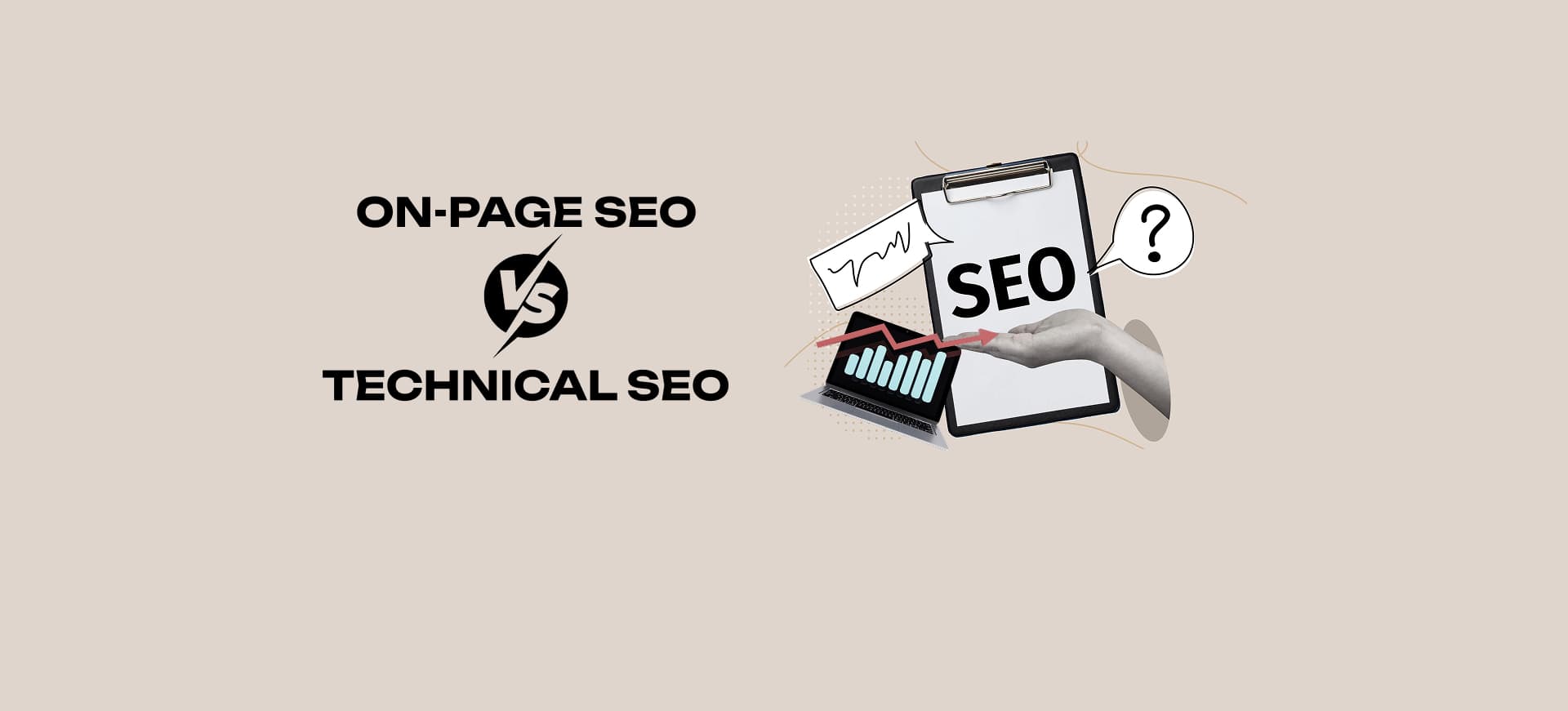
On-Page SEO vs Technical SEO: What Actually Moves Rankings

A practical guide to understanding how on-page SEO and technical SEO work together, where each one matters most, and how to focus on what drives results.

HTSOL Inc

HTSOL Inc

published date

26, Apr 2026

#SEO Strategies

#Technical SEO

#On-Page SEO

#SEO Strategy

#Search Rankings

#SEO Audit

Many businesses invest in SEO but still struggle to improve rankings. One common reason is simple: they focus on the wrong thing at the wrong time.

Some teams spend all their energy updating titles, headings, and keywords. Others spend months fixing speed scores, crawl issues, and site structure. Both matter, but neither works well in isolation. This is where the debate around on-page SEO vs technical SEO becomes important.

If you are trying to grow organic traffic, improve visibility, and turn your website into a real business asset, you need to know what each part does and what actually moves rankings. The truth is not that one always matters more than the other. It depends on the state of your website, your competition, and how search engines experience your pages.

In simple terms, on-page SEO helps search engines understand your content and helps users find value in it. Technical SEO helps search engines access, crawl, and trust that content properly. If one side is weak, the other side cannot perform at its full level.

In this guide, we will break down the real difference between on-page SEO and technical SEO, explain what each one impacts, and show where businesses should focus first if they want better search performance.


What Is On-Page SEO?

On-page SEO is the work done directly on a page to help it rank better in search results.

It focuses on the content and structure that users and search engines can see and understand.

Key parts of on-page SEO include:

  • Page titles

  • Meta descriptions

  • Headings

  • URL structure

  • Internal links

  • Image alt text

  • Keyword use

  • Content quality

  • Search intent match

  • Readability and page layout

The goal of on-page SEO is to make each page clear, useful, and relevant for a specific topic.

If someone searches for a service, guide, or product, your page should make it obvious what it is about and why it deserves attention.

For example, if a page targets “website redesign services,” good on-page SEO would make sure the page has:

  • A clear title around that topic

  • Helpful headings

  • Strong content that answers common questions

  • Internal links to related pages

  • A structure that is easy to scan and read

On-page SEO is what helps search engines connect your page to the right searches.

What Is Technical SEO?

Technical SEO focuses on how well your website works behind the scenes.

It is less about the words on the page and more about how search engines access, crawl, understand, and index your site.

Key parts of technical SEO include:

  • Site speed

  • Mobile usability

  • Crawlability

  • Indexing

  • XML sitemaps

  • Robots.txt setup

  • Canonical tags

  • Structured data

  • HTTPS security

  • Broken links

  • Redirects

  • Core Web Vitals

  • Clean site architecture

The goal of technical SEO is to remove barriers that stop search engines from properly reading and ranking your site.

If your pages are slow, blocked from crawling, duplicated, or hard to access, your content can struggle even if it is well written.

A technically strong website creates a better foundation for everything else in SEO.

On-Page SEO vs Technical SEO: The Core Difference

The easiest way to understand the difference is this:

  • On-page SEO improves the content and meaning of your pages

  • Technical SEO improves the performance and accessibility of your website

One tells search engines what your page is about.
The other helps search engines reach and process that page correctly.

Think of it like this:

If your website were a store:

  • On-page SEO would be your product labels, signs, and sales message

  • Technical SEO would be the building, doors, lights, and layout that let people enter and move around easily

You need both.

A beautiful store with locked doors will fail. An open store with no signs or weak products will also fail.

That is why businesses should stop treating on-page SEO and technical SEO as separate battles. They are two parts of the same system.

Not sure whether your site has a content problem or a technical problem? A proper SEO review can show where rankings are being blocked and where the best gains are hiding.

What On-Page SEO Actually Moves Rankings

On-page SEO often creates the clearest ranking improvements when your website already has a decent technical base.

If Google can crawl your page and index it properly, on-page changes can make a major difference.

Here is what usually moves rankings most on the on-page side:

1. Search intent match

This is one of the biggest ranking factors in real-world SEO.

Your page must match what users actually want when they search.

If someone searches for “best CRM for small business” and your page is just a product page, it may struggle. The search likely calls for a comparison-style article.

Pages rank better when they match the format, depth, and purpose users expect.

2. Strong page titles and headings

Titles and headings help search engines understand the topic quickly.

They also affect click-through rate. A better title can improve visibility and bring more traffic, even if rankings do not change much at first.

3. Helpful, original content

Thin, repeated, or vague content rarely performs well.

Search engines reward pages that are useful, focused, and better than the alternatives. This does not mean longer content always wins. It means the content should solve the user’s problem clearly.

4. Internal linking

Internal links help search engines understand which pages matter most and how topics connect across your site.

They also help users discover more content, which improves engagement.

5. Content freshness and updates

Old pages often lose strength over time. Updating outdated sections, examples, links, and facts can improve rankings, especially in competitive spaces.

6. Clear structure and readability

If a page is hard to read, stuffed with keywords, or poorly organized, people leave faster. That sends weak signals over time.

Simple structure matters:

  • Short paragraphs

  • Clear headings

  • Useful bullet points

  • Direct answers

  • Clean layout

These are not just writing choices. They support SEO performance too.

What Technical SEO Actually Moves Rankings

Technical SEO often matters most when the website has hidden issues that limit search visibility.

In many cases, rankings do not improve because the site is blocked, slow, messy, or confusing for search engines.

Here is what usually moves rankings most on the technical side:

1. Crawlability and indexability

If search engines cannot crawl your site properly, your pages cannot rank well.

Common issues include:

  • Important pages blocked by robots.txt

  • No-index tags added by mistake

  • Broken internal linking paths

  • Poor site structure

These problems can quietly damage SEO for months.

2. Site speed and mobile performance

A slow site hurts both users and rankings.

If pages take too long to load, people leave before they engage. Search engines want to send users to pages that work well, especially on mobile.

3. Duplicate content and canonical problems

If Google sees many versions of the same page, it may struggle to decide which one to rank.

This often happens with filters, parameters, category pages, and poor canonical setups.

4. Broken pages and redirects

Too many 404 pages or bad redirects weaken user trust and waste crawl budget.

A clean website sends stronger quality signals.

5. Core Web Vitals

These are performance signals tied to loading speed, visual stability, and interaction.

They are not magic ranking boosters on their own, but when your site is already competing closely with others, they can help.

6. Structured data

Structured data helps search engines understand your pages better and may improve how your results appear in search.

It can support rich results such as FAQs, reviews, products, and articles.

Which One Matters More?

This is the question most businesses ask. The honest answer is: it depends on your current website.

On-page SEO matters more when:

  • Your site is already crawlable and indexable

  • Pages exist, but are poorly written

  • Content does not match search intent

  • Titles, headings, and internal links are weak

  • Traffic is flat because the content is not competitive

Technical SEO matters more when:

  • Important pages are not getting indexed

  • Your website is slow or unstable

  • Search engines struggle to crawl the site

  • You have duplicate pages or bad redirects

  • A site migration or redesign created errors

In many SEO campaigns, technical issues must be fixed first so that on-page work can have a full impact.

But once the technical base is healthy, on-page SEO often becomes the bigger driver of growth.

That is why the real answer is not “pick one.” The real answer is “fix the biggest blocker first.”

What Actually Moves Rankings in Real Business Terms

From a business point of view, rankings move when your site becomes easier to trust, understand, and use.

That happens when:

  • Search engines can crawl your pages

  • Search engines can understand page topics

  • Users find the content useful

  • Users stay engaged

  • Your pages satisfy search intent better than competitors

This means rankings are usually moved by a combination of:

  • Strong content

  • Clear targeting

  • Healthy technical setup

  • Better user experience

  • Smart internal linking

Businesses often lose time by chasing minor SEO tasks while ignoring bigger issues.

For example:

  • Improving one meta description will not fix a site with indexing problems

  • Fixing one speed issue will not help a weak service page rank for a competitive term

  • Adding keywords will not solve poor content quality

  • Publishing blog posts will not help much if important pages are blocked or buried

SEO improves fastest when priorities are based on impact, not guesswork.

If your rankings have stalled, the issue may not be what you think. A balanced SEO plan looks at content, site health, user experience, and search intent together.

Common Mistakes Businesses Make

Many brands treat SEO as a checklist. That approach usually leads to average results.

Here are some common mistakes:

1. Writing content without technical health

Businesses publish more pages but ignore crawl errors, slow speed, or indexing problems.

2. Fixing technical details without improving weak pages

Some websites are technically clean but still do not rank because the content is thin or poorly targeted.

3. Obsessing over keywords

Using the exact keyword many times does not guarantee better rankings. Search engines are much smarter now.

4. Ignoring internal linking

Important pages often sit isolated with no strong links from other areas of the site.

5. Chasing tools instead of users

A page can score well in an SEO tool and still perform poorly if it does not help real people.

6. Forgetting conversion value

Traffic alone is not the goal. The page should support leads, sales, or another clear business outcome.

This is where good SEO becomes more than rankings. It becomes growth.

How to Prioritize On-Page SEO and Technical SEO

If you want a practical approach, start here.

Step 1: Check technical blockers first

Look for major issues such as:

  • Pages not indexed

  • Broken links

  • Slow loading

  • Mobile problems

  • Redirect errors

  • Duplicate pages

If these are serious, fix them first.

Step 2: Review your key money pages

These are usually your:

  • Service pages

  • Product pages

  • Location pages

  • Main landing pages

Ask:

  • Does each page target a clear topic?

  • Does it match what users want?

  • Is the content strong enough to compete?

  • Does the page guide users toward action?

Step 3: Improve internal linking

Support your most important pages with links from related blog posts, category pages, and other relevant sections.

Step 4: Build content around business intent

Do not publish random blogs just to stay active. Publish content that supports your services and answers real search demand.

Step 5: Track results and adjust

Watch:

  • Rankings

  • Organic traffic

  • Click-through rate

  • Conversion rate

  • Indexed page growth

SEO works best when changes are measured and improved over time.

A Smart SEO Approach for Growing Businesses

For most growing businesses, the strongest approach is simple:

Build on a healthy technical base, then win with better pages.

That means:

  • Make sure search engines can access your site

  • Make sure pages load well and work on mobile

  • Make sure content matches search intent

  • Make sure important pages are clear and useful

  • Make sure visitors can move easily through the site

This balanced approach is where real gains happen.

At HTSOL, this is often where businesses see the biggest shift. Not from one trick, but from fixing the right issues in the right order.

SEO becomes more effective when it is treated as part of digital growth, not just rankings.

On-Page SEO and Technical SEO Work Better Together

The strongest sites do not choose one over the other.

They use technical SEO to build a clean, search-friendly foundation. Then they use on-page SEO to create pages that deserve to rank.

Here is how they support each other:

  • Technical SEO helps search engines find the page

  • On-page SEO helps search engines understand the page

  • Technical SEO improves access and performance

  • On-page SEO improves relevance and usefulness

  • Technical SEO supports visibility

  • On-page SEO supports ranking strength and engagement

When these two parts work together, SEO becomes much more stable and scalable.

This matters even more during redesigns, migrations, and growth phases. A site can lose rankings quickly if either side is ignored.

That is why businesses planning new websites, SEO campaigns, or digital growth projects should think beyond isolated tasks. The goal is not just to “do SEO.” The goal is to build a website that performs well for both search engines and people.

Need an SEO partner that looks at the full picture? From content improvements to site health fixes, the right strategy can turn your website into a stronger growth channel.

Conclusion

The debate around on-page SEO vs technical SEO misses the bigger point.

Rankings do not move because one side wins. They move when your website becomes easier to crawl, easier to understand, and more useful for users.

On-page SEO shapes the message, structure, and relevance of each page. Technical SEO makes sure your site can be discovered, processed, and trusted properly.

If your technical setup is broken, even strong content can struggle. If your content is weak, even a technically sound site can stay invisible. The best SEO results come from balance.

Start by fixing major technical issues. Then strengthen your key pages. Focus on search intent, clarity, internal linking, and user experience. That is what drives lasting gains.

For businesses that want SEO to support real growth, the smartest move is not choosing sides. It is building a strategy where both sides work together.

HTSOL Inc

HTSOL Inc

HTSOL Inc. – Your Trusted Canadian Digital Marketing & Web Development Partner

Published on 26, Apr 2026

FREQUENTLY ASKED QUESTIONS

Providing answers to your questions

insta

view more on instagram

Instagram post 1
Instagram post 2
Instagram post 3
Instagram post 4